Pursuing Your Purpose
January 6, 2015
Christ Church Episcopal, Norcross, GA
The Feast of Epiphany
Isaiah 60:1-6; Ephesians 3:1-12; Matthew 2:1-12
When I was a young girl I looked forward to the Epiphany service at my church each year. Like tonight, it began after the night sky had become dark. As we arrived, we were each given candles, cre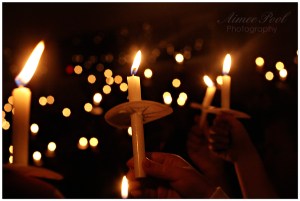 ating a dimly lit sanctuary. The opening hymn was “We Three Kings.” The congregation sang the first and last verse, and male soloists from the choir sang the middle verses. Each king sang their arrival, walking ever-so-slowly up the long-center aisle; each dressed in finery of a far-off-land; each carrying a gift brought for the God-child they had searched out. The smell of the frankincense filled the sanctuary – creating a full-on sensory experience.
For completely different reasons, this evening’s service, with bi-lingual scripture, prayers and music, is just as glorious; just as life-giving. This time tonight represents a manifestation of experiencing the beauty of a new born thing, worthy of The Epiphany! It is a time of letting go of what is common place, of the status quo, which isn’t always easy. Read the rest of this entry »
Got Wheat?
July 20, 2014
Christ Church Episcopal, Norcross, GA
Proper 11 – RCL Year A
Genesis 28:10-19a; Romans 8:12-25; Matthew 13:24-30, 36-43
In today’s gospel we have another parable from Jesus to the crowds, and as Matthew seems kind enough to do, we also have an explanation of the symbols in the parable, shared only with the disciples… and us, it seems.
Like the sower and the seeds parable we heard last Sunday, Jesus continues to use farming imagery familiar to his audience. But in this parable the seeds no longer represent the spreading of God’s word. Instead we have two kinds of seeds. The seeds of wheat are the good seeds sown by the Master. The other seeds are weeds, sown at night by the enemy. We are told that the good seeds represent the children of the kingdom, while the weeds represent the children of the evil one, sown by the devil.
Now, some might look at this text and conclude that one’s goodness or evilness is predetermined – that when we come into this world, we are either cast as a seed of wheat or as a weed, and there’s nothing we can do about it. I don’t believe that this is how things work. And, for the purpose of Matthew’s gospel, this parable is more likely about Jesus’ hope to expand God’s kingdom in the world.

Source: http://blog.illumina.com
Through this parable, Jesus is beckoning the crowd to be WHEAT… that is, to hear his message about God and live into God’s call to love others. The alternative is to fall under the influence of those who act contrary to God’s message of love; those who focus on, or get distracted by, worldly things.
Radically Sowing Seeds of Inclusiveness
July 13, 2014
Christ Church Episcopal, Norcross, GA
Proper 10 – RCL Year A
Genesis 25:19-34; Romans 8:1-11; Matthew 13:1-9, 18-23
The parable of the sower and the seeds always takes me back to the days when I was in Youth group, many, many, MANY years ago.
 When I was in the 7th or 8th grade the youth leaders decided that we would put on a production influenced by the musical Godspell. There was a group of teens that did the singing and another group, of which I was a part, that did pantomimes of narrated parables. We wore clown-style make up and bright-colored clothes and got to run up and down the aisles of the church – what else could you ask for!
The parable of the sower and the seeds was one of the big hits. As each set of seeds were tossed by the sower, children would drop in a squat on the floor in a tucked position. My favorite memory was the first set to seeds thrown. They were played by smaller children, like Charlie or Callie’s age. Then, Randy, a tall lanky teen, played the big bird that came swooping down and lifted the little person-seed way above his head and carried them down the center aisle, cawing all the way. Read the rest of this entry »
Rebirth of Understanding
March 16, 2014
Christ Church Episcopal, Norcross, GA
The Second Sunday in Lent – Year A RCL
Genesis 12:1-4a; Romans 4:1-5, 13-17; John 3:1-17
 In today’s gospel we hear the familiar story of Nicodemus, a leader in the Jewish tradition; a Pharisee. During the night, under the cover of darkness, Nicodemus comes to Jesus. Having seen the signs that Jesus has done, he affirms that Jesus must be a teacher who comes from God, because surely these signs wouldn’t be possible without God’s presence.
And instead of accepting this affirmation from Nicodemus, it says, “Jesus answered him, ‘Very truly, I tell you, no one can see the kingdom of God without being born from above.’”
Nicodemus is confused by this. He likes things to be straight-forward. He’s used to abiding by the letter of the law, carrying out the commandments that God has set forth. So now, he hears Jesus saying that one has to be “born from above” and Nicodemus’ literal nature responds in a literal way: “How can anyone be born after having grown old? Can one enter a second time into the mother’s womb and be born?”
But Jesus isn’t talking about an earthly birth, one based in flesh, but instead, he talks of being born of the Spirit. Being born into the person God calls us to be; not the image that the world has for us.
So what is this rebirth? What does it look like?

