Celebrate Lent, Celebrate Life
March 1, 2017
Christ Church Episcopal, Norcross, GA
Ash Wednesday
Joel 2:1-2,12-17; 2 Corinthians 5:20b-6:10; Matthew 6:1-6,16-21
(Gospel Text provided below)
In a few minutes, as part of this Ash Wednesday liturgy, I will extend an Invitation to the observance of a Holy Lent. This invitation says in part:
I invite you… to make a right beginning of repentance, and as a mark of our mortal nature, let us now kneel before the Lord, our maker and redeemer.
 We’ll then say a prayer of preparation, remembering that we have been created out of the dust of the earth. We’ll ask that the ashes placed on our foreheads be a sign of our mortality and penitence. This is often the focal point on this solemn day. A day we are called to begin a season of introspection, repentance, and self-denial.
Yet, I want to point out that in that prayer there is one additional component…
… that we may remember that it is only by [God’s] gracious gift that we are given everlasting life…
I believe that the remembrance of this gracious gift is also an integral part of the day. Today’s gospel passage from Matthew calls us to lean into this gracious gift. It invites us to embrace the special connection we each have with God, and amplifies the realization that everything we have and who we are is GIFT. Read the rest of this entry »
Follow that Star!
January 6, 2017
Christ Church Episcopal, Norcross, GA
The Feast of the Epiphany
Isaiah 60:1-6; Ephesians 3:1-12; Matthew 2:1-12
(Gospel Text provided below)
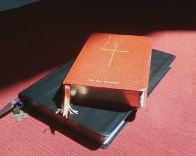 I am, what is often referred to in church-circles, a cradle-Episcopalian, which means I’ve spent my whole life connected to the liturgical cycle of this particular Christian denomination. Through the decades of my life, except for the “new” Prayer Book, adopted when I was young, and the shift from purple to blue as the color for Advent, things haven’t changed very much.
I remember, as a child, looking forward to The Epiphany service with great anticipation. I loved astronomy, so the emphasis on the bright star and the three wise men, sometimes called astronomers, surely contributed to my love for this day. And the atmosphere at church was very different from our usual Sunday morning worship.
On Sundays, the sanctuary was full of light and activity. By contrast, Epiphany usually fell in the middle of the week, and was always an evening service. We’d enter a dimly lit Nave, the darkness amplified by wintery skies, and muted stained-glass windows. We held individual candles – the ones with those little cardboard circles around them, intended to keep the wax from dripping on our hands. The goal – don’t catch anything on fire, especially your sister’s hair.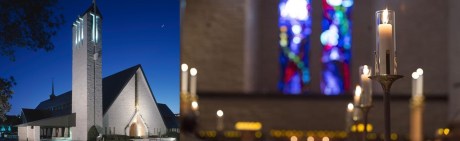
The procession began with the familiar hymn
“We Three Kings of Orient are bearing gifts, we traverse afar…”
The Value(s) of Joseph
December 18, 2016
Christ Church Episcopal, Norcross, GA
4th Sunday of Advent – Year A
Isaiah 7:10-16; Romans 1:1-7; Matthew 1:18-25
(Gospel Text provided below)
When I was 24 years old, after a couple of years at one of the Big-8 Accounting firms (now it’s the Big 4), I was hired to be the supervisor of a Commercial Loan Accounting department at First City Bank in Houston. In this role, I’d manage a staff of eight people, all of whom were older than me.
My experience as an auditor was with Oil & Gas clients and a few hospitals. I knew nothing about banking, aside from having a checking account, and even that was fairly new to me. I’d never been a supervisor in a work-setting – so needless to say, being hired into this role was a bit daunting. I joked that the real reason I was hired was because Mary, the department manager, wanted me to play on her inter-bank softball team! But, it’s more likely that Mary hired me, at some level, because of my father.
Now, a few years earlier this would have been a problem. When I trying to get my first job after college, I wanted desperately to be hired independent of my family. My dad was a prominent Houston City Councilman, even a potential contender for Mayor. 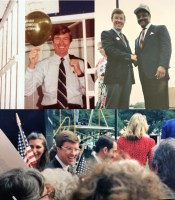 I love my dad, and he’s a huge part of my life, but I really wanted to “make it on my own” like the Mary Tyler Moore theme song!
Yet here I was, just a couple of years later, being hired into a job with no proven experience, and if I’m honest, softball team notwithstanding, it was probably based on my boss’s knowledge of my father. Now, she didn’t know him personally, but what she did know about him, she liked and respected. So, despite all I didn’t bring to the table, Mary took a chance on me – which began my twenty-year career in bank operations. Read the rest of this entry »
Wilderness-Tending Time
December 4, 2016
Christ Church Episcopal, Norcross, GA
2nd Sunday in Advent – Year A
Isaiah 11:1-10; Romans 15:4-13; Matthew 3:1-12
(Gospel Text provided below)
Bugle blast – 3 times
Sing Godspell intro:
Prepare ye the way of the Lord.
Prepare ye the way of the Lord.
Prepare ye the way of the Lord.
Prepare ye the way of the Lord.
This is how the 1970’s Broadway musical, Godspell, begins. Then comes the booming drum fill with crashing cymbals ripping through the silence, enlivening the procession as the tempo takes flight!
When I was in Junior High School, my youth group enacted a version of Godspell at our 9am Sunday worship service. As the bugle and soloist gave way to the drums and cymbals, the pantomime cast, including me, dressed in colorful clothes and clown make -up, careened through the aisles of the church. This high-velocity, energetic entrance was quite a shock for the mostly buttoned-up, unsuspecting, stoic congregation.

I always think of our Godspell production when I hear today’s gospel story. As startling as the bugle blast you just heard, we find John the Baptist in the wilderness crying out, “Repent, for the kingdom of heaven has come near.”
Now, it is only Matthew’s version of this story that includes the detail that John was wearing camel hair and a leather belt. You see, Matthew’s gospel was written for a mostly Hebrew audience and intends to show how Jesus is the fulfillment of the ancient Hebrew prophesies. So, to these early listeners, this image of John would harken back to the prophet Elijah, described in 2 Kings as “A hairy man, with a leather belt around his waist.” (2 Kg 1:8).
In our Old Testament reading today, we heard from another prophet, Isaiah:
A shoot shall come out from the stump of Jesse, and a branch shall grow out of his roots. The spirit of the Lord shall rest on him, the spirit of wisdom and understanding… (Is 11:1-2a)
This is the foretelling of Jesus. Jesus is the “shoot (or descendant) from Jesse,” who was King David’s father. It is in Matthew’s gospel that we hear again and again, as stories of Jesus are told, that “this took place to fulfill what had been spoken by the Lord through the prophets.”
In the same way, the crying out by John the Baptist is likened to another passage from Isaiah. The gospel version says that John the Baptist’s cry for repentance is:
“The voice of one crying out in the wilderness: ‘Prepare the way of the Lord, make his paths straight.’”
But the actual passage in Isaiah is worded this way:
A voice cries out:
‘In the wilderness prepare the way of the Lord, make straight in the desert a highway for our God. (Is 40:3)
So, in Isaiah, the wilderness isn’t the place the voice is coming from, instead, the wilderness is where we are to prepare the way of the Lord. Read the rest of this entry »

