What’s in a Name?
January 15, 2017
Christ Church Episcopal, Norcross, GA
The 2nd Sunday after Epiphany
Isaiah 49:1-7; 1 Corinthians 1:1-9; John 1:29-42
(Gospel Text provided below)
How many of you, either now or at some point in your life, have had a nickname? I’m not talking so much about shortened names, like being called Jimmy instead of James, but more like Ronald Reagan being called “the Gipper” or Margaret Thatcher, “The Iron Lady”.
When I was growing up, my brother used to call both me and my sister “Twin.” It made things easier, especially during front-yard football games. And while my nickname was short-lived, some span a lifetime.
As we celebrate the life of Martin Luther King, Jr., this weekend, I was curious if he had a nickname. Thanks to Google, I quickly learned that when King was born, he was named Michael, not Martin. When King was 5 years old, his father, a pastor at Ebenezer Baptist Church, in Atlanta, took a trip to Germany. He was so inspired by the Protestant Reformation leader Martin Luther, that when he returned, he not only changed his own name to Martin, but his son’s, too.[i]
Follow that Star!
January 6, 2017
Christ Church Episcopal, Norcross, GA
The Feast of the Epiphany
Isaiah 60:1-6; Ephesians 3:1-12; Matthew 2:1-12
(Gospel Text provided below)
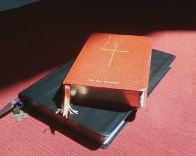 I am, what is often referred to in church-circles, a cradle-Episcopalian, which means I’ve spent my whole life connected to the liturgical cycle of this particular Christian denomination. Through the decades of my life, except for the “new” Prayer Book, adopted when I was young, and the shift from purple to blue as the color for Advent, things haven’t changed very much.
I remember, as a child, looking forward to The Epiphany service with great anticipation. I loved astronomy, so the emphasis on the bright star and the three wise men, sometimes called astronomers, surely contributed to my love for this day. And the atmosphere at church was very different from our usual Sunday morning worship.
On Sundays, the sanctuary was full of light and activity. By contrast, Epiphany usually fell in the middle of the week, and was always an evening service. We’d enter a dimly lit Nave, the darkness amplified by wintery skies, and muted stained-glass windows. We held individual candles – the ones with those little cardboard circles around them, intended to keep the wax from dripping on our hands. The goal – don’t catch anything on fire, especially your sister’s hair.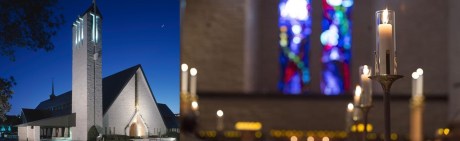
The procession began with the familiar hymn
“We Three Kings of Orient are bearing gifts, we traverse afar…”
Named and Claimed
January 1, 2017
Christ Church Episcopal, Norcross, GA
The Feast of the Holy Name
Numbers 6:22-27; Galatians 4:4-7; Luke 2:15-21
(Gospel Text provided below)
Today we celebrate the Feast of the Holy Name. It’s one of the designated feast days to be celebrated each year, and it always falls on January 1st. Its day-1 placement on the calendar, however, isn’t intended to mark the New Year. It’s to remember the day that Jesus was marked – literally – by circumcision. In the life of the Hebrew people, since the ancient covenant between God and Abraham, it was deemed that all male children would be circumcised on the 8th day after birth, and this is the day they received their name.
Christians have been celebrating Jesus’ birth on December 25th since the 2nd or 3rd century. Well, not all Christians. Some Eastern traditions celebrate it on January 6th, which is for us the Feast of the Epiphany – but, don’t get me started. You see, we don’t know the actual date of Jesus’ birth.  I know it may be hard for us to grasp in our technology rich world, but that kind of stuff really wasn’t as important back then. And face it, they didn’t have Facebook to remind them whose birthday it was, so how could they possibly keep track?
And while there are theories about how December 25th came to be the chosen date – as possibly the acculturation of pagan rituals, or perhaps a theologically-based link between the date of Jesus’ crucifixion and the date of his initial conception[i] – at this point, how we got to December 25th isn’t important. That said, the benefit of having a specific date is that it provides a point of reference to mark other events in Jesus’ life. Particularly events that reveal Jesus living into his life as a person in covenant with God.
I find it interesting that it’s Luke’s gospel, the one written to a mostly Gentile audience, that these Hebrew rituals are noted. First the circumcision on the 8th day, and later, at 40 days after Jesus’ birth, we see the Presentation in the temple, on February 2nd. That’s when Jesus is taken to the temple, and then comes out, sees his shadow, and there’s another 40 days of Lent… no, wait that’s not it. It actually marks the day when Mary is allowed to go back into the temple, 40 days after having a child, when her hormones are presumed to be back in balance – seriously, that’s why. Since Jesus would still be nursing at that point, it also marks his first time in the temple.
So why might this gospel writer share these Hebrew moments with his audience?
I think, in part, to reveal the lifelong connection, a lifelong covenant between Jesus and God. The word bris, which is what the circumcision celebration is called, means covenant. It takes place at the bidding of the family, not the child. It conveys an intention of raising that child within the Hebrew tradition, with a faithfulness to God.
 The reason for the eight-day wait wasn’t to ensure the viability of the child, but instead, so that a Sabbath would pass before the bris takes place. Keeping the Sabbath is compared to keeping the whole Torah. The Sabbath is a testimony that God made the world. As a commandment, it holds the same weightiness as “Thou shalt not kill.” So, waiting eight days ensures that observing the Sabbath is a precursor to entering into the covenantal relationship marked by circumcision.[ii] And with it, the naming of the child.
We are told in Matthew’s gospel why the name of Jesus was to be used: …you are to name him Jesus, for he will save his people from their sins.(Mt 1:21)
You see, to sin means to miss the mark. It is also defined as anything that separates us from God. The foreskin was considered a representation of that separation of humans from God which began with Adam’s original defiance. So, in circumcision, the removal of the foreskin represented the stripping away of those things which came between God and man.[iii]
Just as Jesus’ life begins with this covenantal act of circumcision, many of our lives began with a covenantal act made on our behalf as infants – our Baptism. We see this same transition which began in the earliest Jesus-following communities, mentioned in Paul’s letter to the Colossians:
In [Jesus] also you were circumcised with a spiritual circumcision, by putting off the body of the flesh in the circumcision of Christ; when you were buried with him in baptism, you were also raised with him through faith in the power of God, who raised him from the dead. (Col. 2:11-12)
The water of Baptism symbolizes that which washes away our sins. Which allows our old selves to pass away, and for us to take on a new life in relationship with God. Jesus’ life opened that up to all people.

I contend that his life transformed the world because he was willing to embrace the love of God, and see that God’s grace was intended for all people, like never before. Jesus hoped to open boundaries, not create them. He dared to make relationships with outsiders, like Samaritans, the Syrophoenician woman, lepers, criminals, and even Roman centurions.
We see that often his actions rubbed the leaders of his own tradition the wrong way. He ruffled some feathers, but not just for the sake of stirring things up. Instead, it was for the sake living into his given name – one who saves all people from those things that separate us from God.
Through Christ, and our promise in Baptism, we are called into a lifelong covenantal, connected relationship with God. In that relationship, we are to see the dignity of each person, affirming that we are all made in God’s image.
Today we celebrate this Holy Naming – being re-claimed as God’s child.
In being claimed, we continue to live into a life as children of God.
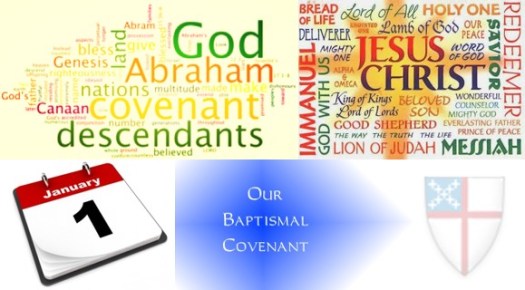
 What better time than on the 8th day after Christmas, to remember and re-embrace this mark on our life. As we stand together and reaffirm our Baptismal Covenant this morning, on this first day of the new year, I invite you to consider what name you will take upon yourself as you journey into a renewed covenant with God.
Peace-maker?
Justice-seeker?
Kindness-spreader?
Server-of-those-in-need?
Joyful-noisemaker?
Welcomer-of-all?
May you live fully into your Holy Name, and have a Happy and Holy New Year!
Gospel Text:
When the angels had left them and gone into heaven, the shepherds said to one another, “Let us go now to Bethlehem and see this thing that has taken place, which the Lord has made known to us.” So they went with haste and found Mary and Joseph, and the child lying in the manger. When they saw this, they made known what had been told them about this child; and all who heard it were amazed at what the shepherds told them. But Mary treasured all these words and pondered them in her heart. The shepherds returned, glorifying and praising God for all they had heard and seen, as it had been told them. After eight days had passed, it was time to circumcise the child; and he was called Jesus, the name given by the angel before he was conceived in the womb. (Lk 2:15-21)
[i] Andrew McGowan, “How December 25 Became Christmas”, 12/02/2016, originally appeared in Bible Review, December 2002. The article was first republished in Bible History Daily in 2012.—Ed., http://www.biblicalarchaeology.org/daily/biblical-topics/new-testament/how-december-25-became-christmas/, Accessed December 31, 2016.
[ii] Daniel Eisenberg, M.D., “Circumcision and the Eighth Day”, Published: May 11, 2008, © 2016 Aish.com – Your Life, Your Judaism, http://www.aish.com/ci/sam/48964686.html?mobile=yes , Accessed December 31, 2016.
[iii] Ibid.
Celebrating Saints
November 6, 2016
Christ Church Episcopal, Norcross, GA
All Saints’ Day (transferred) – Year C
Daniel 7:1-3,15-18; Ephesians 1:11-23; Luke 6:20-31
(Gospel Text provided below)
I was lucky to get to know both of my Grandmothers as I was growing up. Both lived in Houston, both had ancestors who fought in the Revolutionary War, and both were named Mary. That may be where their similarities end.
My Grandmother Greenwood was from Lancaster, Pennsylvania. She moved to Houston after marrying my grandfather, who became a prominent neurosurgeon. The entry room of their grand two-story house was adorned with framed cross-stitch samplers made by the very daughters of those early colonial soldiers. She also had a Union Army uniform worn by her grandfather in the Civil War, along with three sabers and musket from that era. She was a collector of history and family heirlooms. She was an active member of the Daughters of the American Revolution, she always had a “Go Navy” bumper sticker on her car, and in addition to raising six children, she was active in the Episcopal church and volunteered for the Red Cross, among other things.
 Each Sunday after church we’d go to Grandma Greenwood’s house in our Sunday finest. We’d scamper upstairs to play games with our many cousins and if we were lucky, we’d be picked to help Grandpa wind the grandfather clock in the living room. When the food was ready, Grandma would call us to dinner, and we’d flock to the kitchen and take our places at the kid’s table. All my aunts and uncles gathered ‘round the large dining room table for a proper Sunday dinner, where white rice and sweet corn accompanied every meal, and Blue Bell ice cream brought it to an oh-so-sweet close. Read the rest of this entry »

