A Lenten Mitzvah
March 12, 2017
Christ Church Episcopal, Norcross, GA
The 2nd Sunday in Lent
Genesis 12:1-4a; Romans 4:1-5, 13-17; John 3:1-17
(Gospel Text provided below)
Thursday a week ago I received a Facebook message from a former co-worker. In it, and the ensuing phone conversation, I learned that one of the sons of a close friend in Houston had died. Jonathan was twenty-seven. His death was tragic.
Since the family is Jewish, I knew the funeral would be quick, so within an hour I had a plane ticket and began rearranging my schedule for the weekend. I landed in Houston by mid-morning on Friday, and arrived at the graveside by 2pm. Standing in the bright sunlight, feeling the cool spring breeze, I held tightly to the yarmulke I received fourteen years earlier at Jonathan, and his twin sister, Robin’s, b’nai mitzvah.
 After reflections about Jonathan’s life were shared by the rabbi, we recited Psalm 23 – Yea, though I walk through the valley of the shadow of death, I will fear no evil. For thou art with me. We were then all invited to help shovel dirt on the plain-wood coffin that had been lowered into the ground – I went for the big shovel. By 3pm, Jonathan was laid to rest, entombed by the earth and sealed with the recitation of the Mourner’s Kaddish.
The Gift of Lent
February 26, 2017
Christ Church Episcopal, Norcross, GA
The Last Sunday after Epiphany
Exodus 24:12-18; 2 Peter 1:16-21; Matthew 17:1-9
(Gospel Text provided below)
Today is the last Sunday before Lent… so live it up!
It reminds me of a t-shirt I saw on one of our family road-trips. By this time, we were in our teens, and headed to Idaho for a 6-day raft trip. One gift shop along the way had a t-shirt that read “Eat, Drink, and Be Merry, for tomorrow you may be in Utah.” If you’ll allow me Episcopal license, today that shirt might read: “Eat, Drink and Be Merry, for on Wednesday we begin Lent.”

This presumes that Lent is a time of austerity and self-denial. Yet, as a teenager, I learned that Lent can also be a time to take things on. To make a commitment to do something you’ve been putting off, or to improve your well-being, or perhaps, to serve others in a more tangible way. This approach to Lent has been helpful for me, and was especially so during my first few months in Atlanta.
I came to Atlanta from Houston seven years ago to embark on a vocational transformation. I arrived in January with snow on the ground – did I mention I came from Houston? I’d left behind all that was familiar – my family, my friends, and a budding romance. So, while I was living into this new purpose for my life, it came with some losses, some sacrifices.

I didn’t have a job, and wasn’t planning to get one before the start of seminary in August. I moved in January to get settled-in, and start getting to know the diocese I’d call home. As an introvert, though, it would’ve been easy to stay in the warmth of my house, with my dog and cat as constant companions. And as easy as that would’ve been, I knew it wouldn’t move me toward my purpose – to get to know the diocese that had welcomed me.
Fortunately, I received a gift just a few weeks after my move – the gift of Lent. That Lent became a season of taking things on. Read the rest of this entry »
Rules of the Road
February 12, 2017
Christ Church Episcopal, Norcross, GA
The 6th Sunday after Epiphany
Deuteronomy 30:15-20; 1 Corinthians 3:1-9; Matthew 5:21-37
(Gospel Text provided below)
Most summers when I was a kid my family would pack up the station wagon and head off on a road trip. Sometimes we went to the Rocky Mountains of Colorado, other times to see our cousins in Springfield, Ohio. From Houston, it usually took two days of driving to reach our destination, and with five kids and two adults, it was a very full car.
 Now anyone who’s traveled in a station wagon, similar to traveling on a crowded airplane, there are “preferred seats.” As you’d expect, the window seats were first choice. And while sitting in the way-back wasn’t great, especially when the seat faced backwards (whose idea was that?) – even the way-back ranked higher than the dreaded middle seat. But the best seat was the one we called the seat-apart. It’s the one that gets pulled forward to let others into the way-back. What made it so popular was the little split that clearly designated where your seat began and where it ended. All the other seats left room for seat creep, followed by the emphatic complaint: “Mom, she’s touching me!”
Now, my mom’s a big fan of being fair – or at least trying to be fair. So, realizing she had five young children traveling in a very confined space for hour after hour, she came up with a rotation strategy. Every time we stopped for a meal or to get gas, us kids would rotate seats. This way everyone had time in the dreaded middle seat, in the way-back, and in the coveted seat-apart. She put this plan – these rules – in place, with the hope of creating harmony for our long journey together. Read the rest of this entry »
Follow that Star!
January 6, 2017
Christ Church Episcopal, Norcross, GA
The Feast of the Epiphany
Isaiah 60:1-6; Ephesians 3:1-12; Matthew 2:1-12
(Gospel Text provided below)
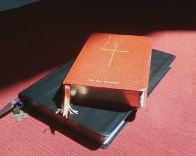 I am, what is often referred to in church-circles, a cradle-Episcopalian, which means I’ve spent my whole life connected to the liturgical cycle of this particular Christian denomination. Through the decades of my life, except for the “new” Prayer Book, adopted when I was young, and the shift from purple to blue as the color for Advent, things haven’t changed very much.
I remember, as a child, looking forward to The Epiphany service with great anticipation. I loved astronomy, so the emphasis on the bright star and the three wise men, sometimes called astronomers, surely contributed to my love for this day. And the atmosphere at church was very different from our usual Sunday morning worship.
On Sundays, the sanctuary was full of light and activity. By contrast, Epiphany usually fell in the middle of the week, and was always an evening service. We’d enter a dimly lit Nave, the darkness amplified by wintery skies, and muted stained-glass windows. We held individual candles – the ones with those little cardboard circles around them, intended to keep the wax from dripping on our hands. The goal – don’t catch anything on fire, especially your sister’s hair.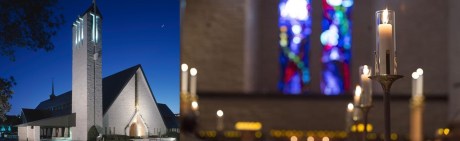
The procession began with the familiar hymn
“We Three Kings of Orient are bearing gifts, we traverse afar…”

