Acts of Surrender
October 25, 2015
Christ Church Episcopal, Norcross, GA
The 22nd Sunday after Pentecost; Proper 25
Job 42:1-6, 10-17; Hebrews 7:23-28; Mark 10:46-52
(Gospel text is provided at the bottom of this post)
Surrender.
Tammy Pallot used that word as she shared her stewardship journey with us a couple of weeks ago. She described stewardship, ultimately, as an act of surrender.
 A few days later at the Wednesday Healing Eucharist, the word surrender emerged again. When looking at the previous Sunday’s gospel text, someone characterized Jesus’ instruction to the rich man – to sell all his possessions and give the money to the poor – that is, to leave everything and follow Jesus, as an act of surrender.
And, a few days later, at a continuing education conference, the word surrender came up again, when I came face to face with Centering Prayer. You see, when I enrolled in the conference, it was the topic that drew me in, and I hadn’t grasped that it would be not only a silent retreat, but also filled with several hours of centering prayer each day.
For those unfamiliar with centering prayer, as I was until last weekend, you sit in silence and in stillness for a designated amount of time – usually at least 20 minutes, but it can be more. And, in that silent stillness, you consent to God’s presence and action within you. Certainly an act of surrender.
As I reflect on today’s gospel lesson, I see several acts of surrender, as well.
First, it begins by telling us that Jesus and his disciples entered Jericho. Then, the very next sentence talks about them LEAVING Jericho, but now, there is a large crowd with them. We aren’t told what happened in Jericho – perhaps the original “what happens in Jericho, stays in Jericho” – but we know that SOMETHING happened, because people have surrendered their normal life – have left their homes – and are now following Jesus!
Next, as Jesus is walking along the road with this crowd of people, my guess is that he’s continuing to teach and share his Jesus-ness with them! Then all of the sudden, this blind man named Bartimaeus is on the side of the road and begins crying out,
“Jesus, Son of David, have mercy on me!” Many sternly ordered him to be quiet, but he cried out even more loudly, “Son of David, have mercy on me!”
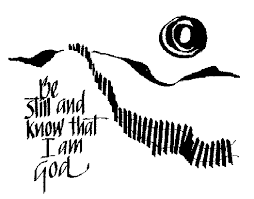 Now, Jesus could’ve kept on with his teaching; kept walking and never looked back. But, he had just admonished James and John for being all about the power and glory. Jesus had just said that “the Son of Man came not to be served but to serve, and to give his life a ransom for many.” (Mk 10:45) So, instead of going about his own plan for the day, Jesus surrendered. It says “Jesus stood still” – he stopped in his tracks and had them call Bartimaeus over to him.
And then it says “throwing off his cloak, [Bartimaeus] sprang up and came to Jesus.” You can sense his exuberance as he approached Jesus – thrilled to be noticed – someone who has been an outcast and beggar.
But, Jesus doesn’t just assume that he knows what the blind man wants, but instead asks him “What do you want me to do for you?” And Bartimaeus asks to get his eyesight back. While this may seem like a foregone conclusion to us, I wouldn’t be so sure.
This man has been blind for some time, we don’t know how long. He has found a way in life that seems to work, even though it may not be ideal. His basic needs are being taken care of, and no one is expecting too much from him. When his sight is restored, that will change. He will be transformed, not only physically, but society will perceive him differently. What’s more, his understanding of God will be transformed, too, and with it comes an acknowledgement of God’s generosity and mercy in his life.
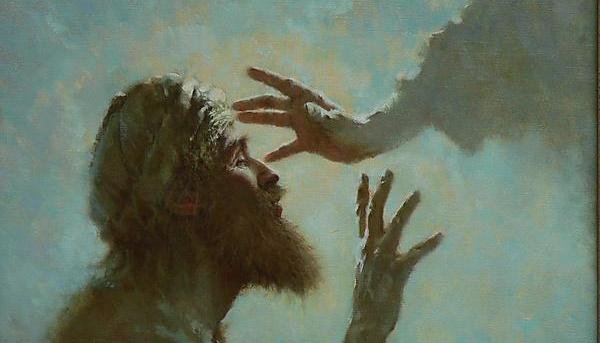 So, in responding to Jesus, Bartimaeus makes a choice to surrender to God:
The blind man said to him, “My teacher, let me see again.” Jesus said to him, “Go; your faith has made you well.” Immediately he regained his sight and followed him on the way.
The proof that this transformation was not just physical, is that Jesus says “Go” yet Bartimaeus, having surrendered himself fully, remained with Jesus – and followed him on the way. Having received the gift of sight, and with it, a transformed life, Bartimaeus surrendered that life to God.
I invite you this morning to think about where you find yourself in this story.
- Are you like one of those in the large crowd that has been touched by the word of God, and surrendered everything to follow Jesus?
- Or, are you consumed by the busy-ness of life; trying to keep everything together; struggling to find a way to simply stand still long enough to feel Jesus’ presence?
- Perhaps you are one crying out for Jesus to have mercy on you? If so, consider how you might answer his question “What do you want me to do for you?” Also rest in the assurance that God’s love and mercy is with you.
- Or, have you felt the power and love of Jesus in your life, like Bartimaeus did – and with renewed sight and a transformed life, chosen to freely give back to God?
We each may find ourselves in different places of this story at different times and circumstances in our life.  We are all on a journey that takes twists and turns, and we can find comfort in knowing that God is with us along the way.
I believe that part of our journey is the act of surrender to self by seeking God’s will for our lives, and in doing this, to give of ourselves – our time, talent and treasure – to God’s work in the world.
So, I ask you today, to surrender.
Gospel Text:
Jesus and his disciples came to Jericho. As he and his disciples and a large crowd were leaving Jericho, Bartimaeus son of Timaeus, a blind beggar, was sitting by the roadside. When he heard that it was Jesus of Nazareth, he began to shout out and say, “Jesus, Son of David, have mercy on me!” Many sternly ordered him to be quiet, but he cried out even more loudly, “Son of David, have mercy on me!” Jesus stood still and said, “Call him here.” And they called the blind man, saying to him, “Take heart; get up, he is calling you.” So throwing off his cloak, he sprang up and came to Jesus. Then Jesus said to him, “What do you want me to do for you?” The blind man said to him, “My teacher, let me see again.” Jesus said to him, “Go; your faith has made you well.” Immediately he regained his sight and followed him on the way. (Mark 10:46-52)
Being Opened by a Merciful God
September 6, 2015
Christ Church Episcopal, Norcross, GA
The 15th Sunday after Pentecost; Proper 18
Proverbs 22:1-2, 8-9, 22-23; James 2:10-17; Mark 7:24-37
(Gospel text is provided at the bottom of this post)
When I was a young girl, probably in 6th or 7th grade, I wanted to be an acolyte at my church. Unfortunately our church didn’t let girls be acolytes. It wasn’t a matter of church policy, just that the man who trained the acolytes said that he’d only let boys be acolytes. He wouldn’t train girls, so they weren’t allowed.
 I’m not sure why he set this boundary – whether he had a deeply held theological conviction about gender roles in the church; or maybe he just found it easier to work with boys – maybe girls required a different teaching style; perhaps he thought girls weren’t up to the task of lighting candles, or carrying crosses and flags and such; or maybe it was just the way it was when he was growing up, so he wanted it to stay that way. I really don’t know why he held fast to this boundary – that only boys could be acolytes – I just knew that he was in charge, he set the rules, and no one was asking him to let girls in.
Then, one day, I’m not sure how it happened, a few of us girls told our Youth Minister, Steve, that we wanted to be acolytes. He was pretty new to the church, and didn’t see any problem with it, so he trained us. While we still couldn’t acolyte on Sunday morning, we could come to either of the two weekday Eucharist services and acolyte there. This meant waking up very early on Wednesday mornings during the summer so we could help at the 7am Eucharist. That’s how determined we were.
Transforming Bread for All People
August 23, 2015
Christ Church Episcopal, Norcross, GA
The 13th Sunday after Pentecost; Proper 16
1 Kings 8:22-30, 41-43; Ephesians 6:10-20; John 6:56-69
(Gospel text is provided at the bottom of this post)
I always know the school year has started when I see clusters of parents walking their young children to school. I grew up in a time when parents rarely walked their kids to school. We’d jump on our bikes and head off on our own. Even so, there were rules we were expected to follow to keep us safe along the way.
 I remember one time, my younger sister, Virginia, was later than usual getting home from school, and Mom was getting worried. When my sister finally made it home, amid the relief, my mom asked her why it took so long. It turns out that when Virginia came to a busy intersection on her way home, she remembered the rule my parents taught her – to not cross the street until there weren’t any cars. While that’s a good rule, it doesn’t always work so well. If memory serves, the next lesson Virginia learned was about how to use the Walk/Don’t Walk signs at busy intersections!
Rules are important. For children, they can help set boundaries and keep them safe. Yet, as we grow older, we begin to use our own judgment; perhaps test the boundaries of the rules. And, as our context changes, like standing at a busy intersection, some rules need to be replaced with a new way forward.
John’s gospel shows us Jesus as the one who provides this new way; he’s all about transformation from what WAS to what’s NEXT! Read the rest of this entry »
Revealing the Empty Tomb
April 4, 2015
Christ Church Episcopal, Norcross, GA
The Great Vigil of Easter
Romans 6:3-11; Mark 16:1-8
(Gospel text is provided at the bottom of this post)
In the course of this evening, we’ve moved from the darkness of night – holding the painful, confusing crucifixion of Jesus on the cross – to the bursting-in of light – rejoicing and celebrating the glorious resurrection of Jesus Christ anew!
We’ve heard our ancient stories retold: beginning again in darkness, until God’s “Let there be Light!” spoke creation into existence. We traversed the Red Sea alongside the Israelites. By God’s grace, our hearts of stone were made new, and we witnessed God’s generosity and power as dry bones were transformed to a new and reformed life!
And now we’ve extinguished our candles and in the bright light of Christ, we hear more good news! The tomb is empty! The crucified Christ is no longer confined by the cold stone walls of death! Alleluia, Christ is risen! The Lord is risen indeed, Alleluia!
In Mark’s gospel, we’re told that when Mary Magdalene, Mary the mother of James, and Salome – these three women – approach the tomb, they see that the stone has been rolled away. When they entered the tomb, they saw a young man dressed in all white. He told them that Jesus had been raised and was not there. He instructed them to go and tell Peter and the other disciples that they will find Jesus in Galilee.
But what comes next isn’t your usual resurrection story… unlike the other gospel writers, Mark ends his gospel saying: “So they went out and fled from the tomb, for terror and amazement had seized them; and they said nothing to anyone, for they were afraid.”
They said nothing to anyone.
 jodygreenwood