Rest, Rejuvenation & Re-formation
July 19, 2015
Christ Church Episcopal, Norcross, GA
The 8th Sunday after Pentecost; Proper 11
2 Samuel 7:1-14a; Ephesians 2:11-22; Mark 6:30-34, 53-56
(Gospel text is provided at the bottom of this post)
So, remember two weeks ago… the disciples were empowered and sent out by Jesus, two by two, with only a staff in hand and sandals on their feet. They went out to do God’s work in the world.
In today’s lesson we see that they have returned from their work. They are gathered around Jesus telling him all about their excursions! They were probably amazed by how much they’d been able to accomplish – preaching, being witnesses for God, and healing the sick – these are the things Jesus had been doing – and now the disciples saw that by trusting in God, having been empowered by Jesus, they could do it, too!
I can imagine the scene – all the disciples trying to get a word in edgewise. The pairs of disciples were likely finishing each others’ sentences as they told their stories; marveling at the work they’d done on the journey; meeting new people in unfamiliar places. They were told to take no food, no money, no extra clothes, and now they’ve come back and are sharing stories of how their needs were met by the kindness of strangers; adding to the excitement of having embodied God’s work in the world!
When you get that fired -up about things, you just want to keep going, and going and going, right? You’re touching lives! You’re making a difference! You’re on-fire for Jesus!!!
And then what happens? Mark’s gospel says:
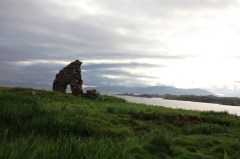
Photo by Jody (Iona, Scotland)
(Jesus) said to them, “Come away to a deserted place all by yourselves and rest a while.” For many were coming and going, and they had no leisure even to eat. And they went away in the boat to a deserted place by themselves. (Mk 6:31-32)
On Purpose
July 12, 2015
Christ Church Episcopal, Norcross, GA
The 7th Sunday after Pentecost; Proper 10
2 Samuel 6:1-5, 12b-19; Ephesians 1:3-14; Mark 6:14-29
(Gospel text is provided at the bottom of this post)
If you were here last Sunday, you heard me make the case that Mark’s Gospel is the Action/Adventure movie of the New Testament. But, if we look at today’s passage, it seems more like a horror film. If I were watching this in the theater, this would be the time I’d go get a refill on my popcorn.
When we have a gospel reading like this it’s tempting to turn to the Old Testament or Epistle lesson for a good word, and avoid this gruesome tale altogether. And, as tempting as that was for me, I kept being pulled back to this text. So, let’s stick with Mark’s gospel and see if we can figure out what’s going on here.
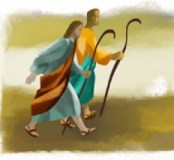 The reading today comes immediately after last week’s lesson… the one where the disciples have been empowered by Jesus and given authority to go and do God’s work. They have gone out two by two, with only a staff in hand and sandals on their feet. They were told to take no food, no money, no extra clothes – just GO, just as they were. They were proclaiming that all should repent. They were casting out demons. They were anointing the sick with oil and curing them. Pretty powerful stuff!
Then, all of the sudden, we’re presented with this odd and terribly graphic story about Herod and the beheading of John the Baptist. Read the rest of this entry »
Putting on the Cape-of-Christ
July 5, 2015
Christ Church Episcopal, Norcross, GA
The 6th Sunday after Pentecost; Proper 9
2 Samuel 5:1-5, 9-10; 2 Corinthians 122-10; Mark 6:1-13
(Gospel text is provided at the bottom of this post)
When I was growing up, summertime was a time for going to the movies – in movie theaters – long before Netflix and On-Demand. We’d pull out the entertainment section of the morning newspaper… you know, a real paper. We’d turn to the movie page to get the theaters and starting times, and we’d begin to figure out what we wanted to see.
The first thing you have to decide is what kind of movie you want to see – drama, romance, or action/adventure. Action was usually a safe bet, and in today’s fast-paced world, it seems to still be a big-draw.
 If you Googled action-movies right now – please don’t, but if you did – you’d find a series of sequels to action films we can’t seem to get enough of, like Terminator, Mad Maxx and Jurassic Park. And then we have the Marvel Comic-book inspired Action-Hero movie: The Avengers! – where Superheroes come together, joining forces to save the planet from the evil villains of the world.
If I characterize the Gospels by movie genre, I’d say that Matthew seems more like a documentary, while The Gospel of Mark would be the Action/Adventure Movie of the New Testament. No, really! You may not be able to tell from the lesson we read today, but when we look at it as a whole, it’s filled with action.
They’ll know… by Our Love
June 1, 2015
Christ Church Episcopal, Norcross, GA
This is an article written for the church’s monthly newsletter, the Communique, published in June, 2015.
In early May the J2A Pilgrims (the 8th & 9th grade Youth Group) headed to Birmingham, Alabama for their Urban Adventure. The weekend’s purpose is to immerse the teens in an unfamiliar urban area and have them find their way to various locations, by foot and mass transit, without smartphones or internet assistance. It’s a weekend intended to prepare them for their Pilgrimage next summer when they’ll be in unfamiliar lands and work together to find their way.
To spice things up, the group is divided into two teams and they compete to get to all the locations and finish first. We added an Amazing Race component, so they had to gather a piece of information at each destination – like the number of birds in a specific statue. The adults are only there to make sure they don’t get into trouble, but not to help navigate, so the teams must work together and find their way together.
Before the trip, I decided to pick a song that could unite us. I thumbed through an old music book my mom had given me years ago and came across “They Will Know We are Christians by our Love.” It would be easy to teach, and I hoped it would temper the competition somewhat by reminding them that in the midst of a strange place, we’re setting an example of what it is to be Christian. In hindsight, it also connected with each phase of our weekend together – I call that the Holy Spirit!
 jodygreenwood